
Red Flags
What happens when you ignore them.

A few weeks ago, I wrote a post from my perspective as the self-proclaimed “worst surfer in Biarritz.” I’m pleased to report that this is no longer true, and even more delighted to explain why.
It turns out that I wasn’t exactly that bad. I was simply ignoring all the red flags.
That day, there were literal red flags flying to signal the dangerous condition of the waves, subtle indications of caution on the faces of the people I was renting my board from, and internal alarms ringing in the pit of my stomach as I walked into the water.
It was my first time committing to seriously surfing in a while, and I still chose to disregard all the warning signs. Why? Because I was so excited to try something new and so hopeful that the red flags would simply fly away. The “danger” they were signaling looked so tempting and alluring, it was hard to acknowledge the pain it could cause. I figured the outcome couldn’t be that bad — it would at least be an enriching experience. The red flags would eventually come down.
Of course, they did not come down.
The waves were incredibly rough, the board I ignorantly chose didn’t match the support I needed, and my nerves never settled. If there were ever a recipe for disaster, this was it.
Now, I could make this post about avoiding red flags in the future. I certainly learned a lot on the topic over the last month, surfing in rather challenging waters. I could explain how to better spot the warning signs and advise on how to divert them. I could even reveal the ways red flags have shown up in other parts of my life and admit how foolish it was for me to ignore them.
But I’m not going to do that. Instead, I’m going to make the — perhaps risky — case for proceeding in the face of the red flags.

Last week, I went surfing in pristine conditions for my level. The waves were smaller, there was barely any wind, and the current wasn’t strong. There was ample time to rest between sets, and the people around me weren’t intimidating.
I stayed in the water for hours and caught multiple beautiful waves. I had pleasant chats with fellow surfers, and I never felt nervous or inadequate. The sun was shining and the timing was ideal. The environment and circumstances set me up for smooth success.
As I sat on my board, I thought: wow, if only the conditions had been this clean before, I would’ve been able to surf so much better… But the reality is that diving headfirst into the red flags prepared me more than pristine conditions ever could.
The time I took to stand up was extended to ensure the wave was steady. The way I arched my back was given careful consideration to avoid another washing-machine nose dive. The force I paddled with was stronger from the muscle memory of battling rougher waves.
I was prepared for war and rewarded with peace.
When I think back to the times I surfed in the last couple years, I realize I took a lot of precautions. I stayed mostly in the whitewash, I used a long beginner’s board, and I always made sure there was an instructor nearby. This was partially due to the fact that I was learning, but there was also a bit of trauma set deep in my body from my very first surf experience.
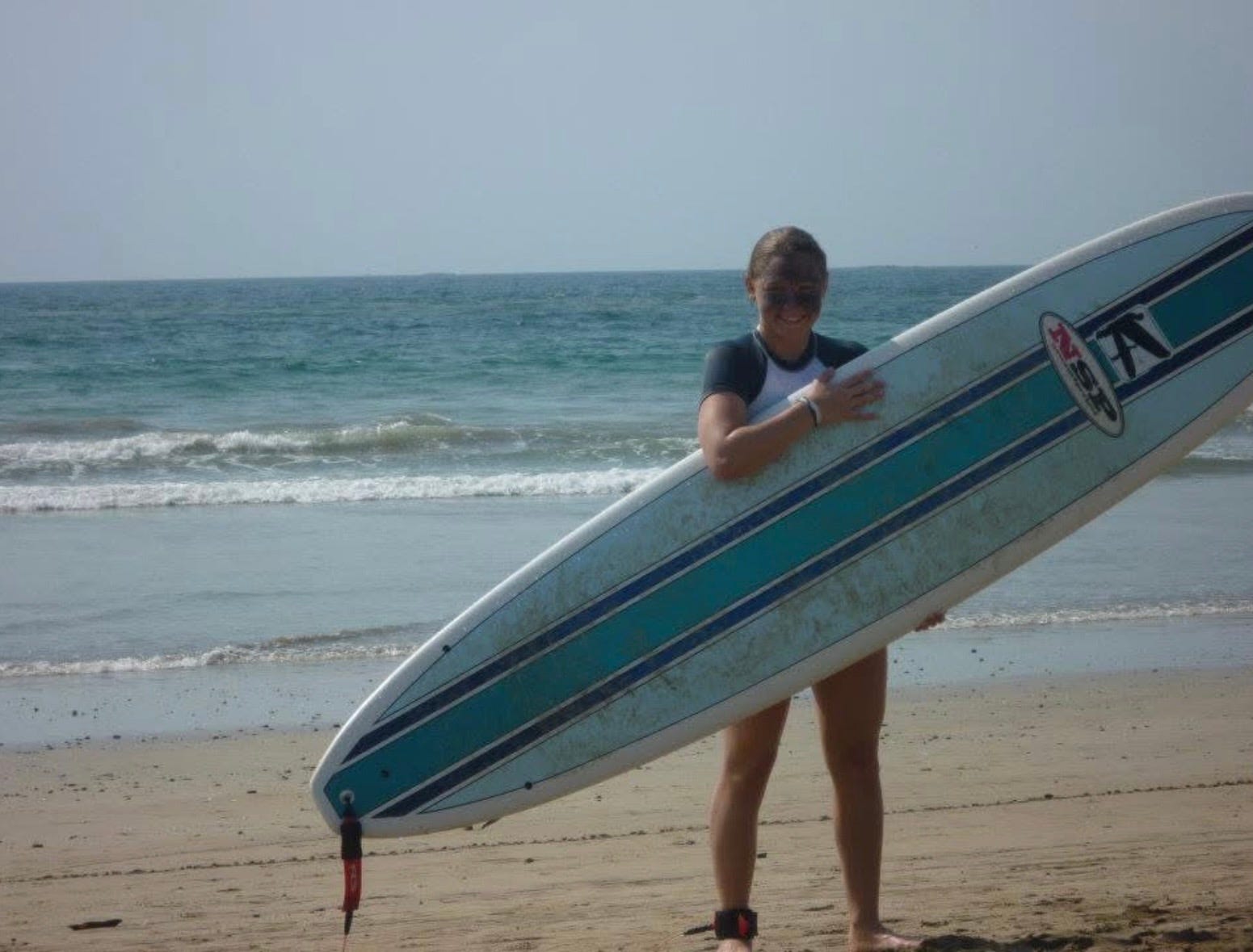
In Tamarindo, Costa Rica, my dad taught my sister and me to surf when we were 11 and 13 years old. While my extraordinary father can do anything he sets his mind to and excels at any sport he tries, he is not a surf instructor. And to be fair, my sister and I were not the most patient students. We learned on hard boards in waves that, to my memory, were colossal (they probably weren’t that big, but that’s how I remember them), and neither of us really understood what to do once we caught the wave.
This led to a series of flops, tumbles, and crashes — one of which involved the fin of my sister’s board gashing me in the head. To this day, I have a scar in the corner of my forehead from the accident.
It sounds slightly tragic, but in all honesty, I had almost forgotten about the incident and the small scar on my face until my sister brought it up recently.
When I thought back on it, the precautions I had been taking as I learned to surf again started making more sense. The body remembers. It was always aware of the risks and instinctively avoided them to prevent repeating the crash.
My choice to actively look past the red flags last month and commit to surfing despite the obvious risks was my first step toward overcoming that deep-seated fear of getting hurt. Little by little, it’s working.
The unfortunate reality is that red flags do signal danger that will, most likely, unfold. By ignoring the warnings a month ago, I was shaken up pretty badly. It’s still slightly scary launching myself into the water, but I’m slowly healing all that ingrained apprehension.
That first experience in Biarritz may have knocked me down and hurt like hell, but the wild moments were rewarding enough to make me want to get back in. Sometimes the red flags appear to call your attention and tempt you to move forward.
Well, I leaned in hard and the red flags are gone.
With courage,
Olivia
Such a good take!! Love it
Be careful but have fun.